The Mask
and brought "artful thinking" into technique. not easy to do.
i loved both of the articles and wished that i could have written the thoughts as well.
i do however, differ in one respect--thinking low, while reaching for a high note.
i believe that the singer should think the note into the "mask", that is to say the cheek area and then on up into the head area above the eyebrows and into the center of the head.
i actually think of it sometimes as a kite flying effortlessly on a breeze and i don't think you can visualize the note too high.
if you think of it coming out of the top of your head and reaching the sky---good!!!
relaxing is the key to thoses extreme highs and just let them "float" from you.
create your own visual of your notes flying like a bird on the wing, a baloon on a string that suddenly is loose to soar into the blue. whatever, can bring you to that magical place. it does feel magical!
the low notes require great relaxation and it is essential that the jaw area be loose. try opening your mouth and dropping your jaw--yes, like you were in a stupor and let yourself just relax in that position for a little while.
it is literally impossible to be tense when you do that and i tell people that i coach,if they are nervous before a performance to do this little relaxing jaw drop and it's amazing how relaxed you do become.
don't drop your chin when going for a low note, but rather let it be breathy and loose. so what if it doesn't have a lot of timber, given enough relaxation and lack of fear and it will began to resound.
the most important thing about singing--- that is, if you can sing well---is the breathing.
i will write to you next on an aerobic breathing technique that not only will help you hold a note--forever--and sing well long after others have retired, but for you ladies and gents too--an added plus--a beautiful waistline.
i have taken great delight in helping singers that i coach attain this.
the technique is so simple and if you practice it every day--it's fun! you could walk the steps up to the empire state building and never be short of breath(provided you don't have health problems, such as asthma, etc}.
even if you are overweight(depends on how much_) you will see your stamina, energy level and vocal performance improve radically.
i honestly believe that my voice and i will leave this orb at the same time and that as long as i am here, my voice will remain healthy and my vocal range in tact and my vibrato as it should be.
i do so want the same for all of you who love to sing as much as i do.
i'll just leave this as my next surprise and try to write about it so it makes it easy.
of course, we all know you should not smoke---i'm not preaching--but we all know the score on this.
hey, if i had ever smoked, i'd have a devil of a time quitting, but i'm just saying if you want that voice---try not to do it.
please read jeff brent's articles as those of you who want to begin composing couldn't do better than these articles.i have so many books that were given to me and none were this visual and i believe in visuals entirely.
his writing on composing and on voice should be available everywhere except for our difference about ("thinking low when singing high")otherwise, the best i've ever read on these subjects and i've read tons. br
i am frankly amazed as i have been writing for years and he explained how i do it--but i honestly don't think i ever analyzed composing, just always done it but i have analyzed my voice, because being blessed with so much range and having a desire for others to feel the joy i feel in hitting those highs-- i made a point of doing it.
isn't it good to share? to learn? to form opinions and be willing to change them when you see they should be changed? i am not sure there is a right way or wrong way--but if the singer is willing to experiment--they will find the right way for them.
maybe there are many ways--i only know how i have done it and my voice is an instrument that never fails me.
constantly brings me such joy. i don't feel superior because it is so ever faithful. just never ceases to amaze me and make me feel grateful.
of course, i want to tell you how i do it--cause i want you to feel the thrill of your own voice.br
to amaze me
There are no comments, leave a comment.
Are you in the Pacific Northwest looking for a jazz jam? Check out our weekly Bellingham Jazz Jam!
Jazz Piano Notebook Series

Volume 1 of this educational jazz piano book contains 15 jazz piano exercises, tricks, and other interesting jazz piano techniques, voicings, grooves, and ideas Scot Ranney has picked up over decades of playing on stage.
Being a pro jazz pianist requires good ears, experience, and a bag of tricks that create the kinds of sounds people expect to hear from a jazz pianist. The entries in this book will give you some of those tricks.

"Latinesque"
Volume 2 has 14 jazz piano exercises and tricks of the trade, and quite a bit of it is Calypso jazz piano related material, including some Monty Alexander and Michel Camilo style grooves. Jazz piano education is through the ears, and books like this help connect what you're hearing to what you want to play.
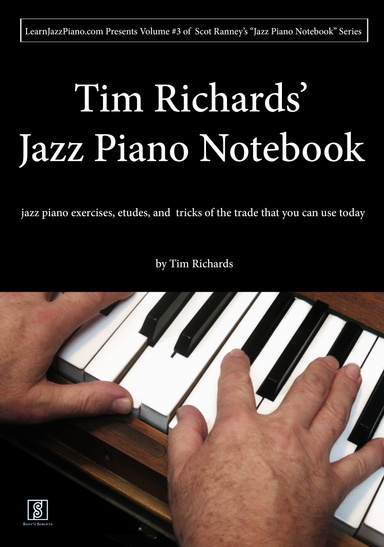
Volume 3 contains 12 jazz piano exercises and explorations by the acclaimed jazz piano educator, pianist, author, and recording artist Tim Richards.
Tim wrote the well known "Exploring Jazz Piano" and "Improvising Blues Piano" books and has several others to his name.
Tim has a new book out Beginning Jazz Piano (Pts 1 and 2)
Many of Tim's books now come with free access to interactive sheet music ONLINE, which permits slowing down of the backing and performance tracks, as well as the option to loop passages for practice purposes.
Tim now also has online VIDEO courses for his books, including Beginning Jazz Piano, Improvising Blues Piano and Exploring Jazz Piano Vol 1:
buy pdf version Tim Richards' Jazz Piano Notebook Volume 3 -
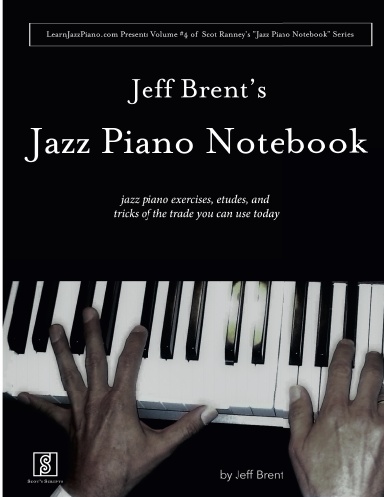
Volume 4 is by Jeff Brent, a jazz pianist, composer, teacher, and author of "Modalogy" and other acclaimed jazz theory and education books. In this book Jeff shares detailed analysis of transcriptions of live performances. He covers everything from the shape of the songs to the tricks and licks he uses in improvised lines to the ideas behind his lush chord voicings.
Most Recent Discussions
Articles
Piano for Adoption Scam
Aprender Jazz en Piano
BEWARE: FREE BABY GRAND PIANO SCAM
Oh Tannenbaum for Jazz Piano
Volume 5 of the "Jazz Piano Notebook Series" is Available!
LearnJazzPiano.com File Downloads News
more...
Top Sheetmusic Picks
Jazzy Christmas Arrangements
Cocktail Piano
Best Songs Ever, 6th Edition
Christmas Medley
Moana Songbook
Late Night Jazz Piano
Jazz piano education is cool.

Rock on. Follow your passion.
Sign In
LearnJazzPiano.com Copyright © 1995-2026 by Scot Ranney • website software and design by scot's scripts
LearnJazzPiano.com is For Sale - Serious Inquiries Only