piano in general
There are no comments, leave a comment.
if you don't know how to play, and you don't wnat to spend any money on lessons, then you have a problem. it is pretty important for a beginner to take a few months of lessons at least so you know how to hit the keys, move your arms, and make a sound out of the piano. if you learn wrong, you will wind up hurting yourself in the way of tendonitis of the hands, wrists, arms, shoulders, etc, and also more serious complications such as carpal tunnel and such.
it's your choice, but the smart choice is to take some lessons and actually pay money for them.
Scot is available for skype jazz piano lessons (and google hangouts, phone call, etc...)
Use the contact link at the top of the page.

by Scot Ranney on 11/22/2004, 08:39
hope that helps
lee
i have played this by ear something i thought i couldn't do (until i found pianomagic) ...the song is "and i love her" by the beatles...now if i could just make it a bit more jazzy i'd be really happy
regards
lee
do you currently play any other instruments? if so, you probably will be able to teach yourself piano, though it may take a while. a good place to start is a book called "how to play the piano despite years of lessons" which you can probably find on amazon. it talks about how to play from sheet music, how to play by ear, and basic theory concepts.
if you don't play any other instruments and don't want to take lessons, you might want to consider taking up an easier instrument first. in my opinion, it is much easier to teach yourself guitar, or a melody based instrument like saxophone, because you can sound pretty good pretty quickly. there is more immediate gratification. once you have a grasp on musical timing and basic concepts, you can switch, or take up the piano as well. playing the piano can be sort of like playing the guitar and saxophone simultaneously, its a bit more difficult.
however, in my opinion the number one most important thing if you are going to teach yourself is to take up an instrument that you like to listen to. in other words, don't take up the clarinet if you don't listen to a lot of clarinet music. that way you will already have a good feel for the type of sound you want to make.
if you are buying a new piano or keyboard, you may be able to bargain for a few free lessons, depending on the store.
if you are buying an old piano, make sure it can be tuned properly. it is very difficult to learn to play on an out-of-tune piano.
because sax only plays melody? because guitarists make it look easy?
any musical instrument can take between 5 to 10 years to effectively master. why spend that time practicing sax when what you really want to do is play piano?
if i were to reccommend any piano hopeful to learn another instrument it would be bass. all pianists need to know the elements (rhythmic, harmonic and melodic) of a well constructed bass line. sadly most do not.
as far as the cross-pollination benefits of learning other instruments is concerned, the first thing to recognize that most people only excel on their first instrument (me being one of the exceptions).
secondary instruments are just that.
the other point to recognize is that in fact many techniques are simply not transferable. trying to use guitar riffs on piano usually sounds lame. when good guitarist come to me for keyboard lessons, i always have to make the point that in order to play piano you have to play it the way a piano player would, ie take into account pianistic conventions.
while it is very interesting to grab horn riffs to use as a basis for piano improv, it doesn't work very well the other way around.
let me try to make this clear: eg although violin and sax occupy approximately the same register, there are stylistic conventions in the way they are traditionally played that make riff transferance virtually impossible.
you learn what you study. studying guitar or sax will not teach you piano. it might teach you music, but that's a whole other subject.
sorry.

i think the instrument you are most likely to excel on is the one you practice the most.
also, like languages, the more instruments you learn, the easier it is to pick up the next one.
yes you might say, you can play those two simple chords on the piano aswell. but it is easier to make those chords sound good on the guitar, than on the piano. i am talking about this from an absolute "music for dummies" perspective... pluss the guitar is often used in more social settings than the piano. you can't strap a piano to your back and bring to a party and say "hey guys i know tom dooley!! let's sing!!"
now that beeing said, i do not agree that learning to play the guitar will automatically make you play piano... it's more like because you already know how to play some music, you have a better understanding of music. i'ts like when you go get your license to drive a car, you pass the exam, you pass the drivers test, now you can drive a car. then down the line, you want to get your license for a motorcycle. yes you know about traffic, but not from this point-of-view. so you go get your exam, which is simular and your previous experience helps you along. teaching your self any instrument requires good musicality, if you are not musical, if you cannot carry a tune, have no sense of rhythm, you can't possible teach your self piano or any other instrument, you can however take lessons, and if you are dedicated you might learn something and live a more musical life, best of luck
cheers!
doc-z
when i started playing piano about 2-3 years ago, i had a lot of musical experience on another instrument and thought i could teach myself jazz piano (ha, no problem!). however, after about 6 months i was experiencing a lot of pain while playing and was having numerous technical problems. it was at that point i finally sought out a teacher. frankly, it was money well spent because i was able to solve the pain problems and fix some technical issues that would have been difficult to resolve without having someone looking over my shoulder and showing me "proper" technique.
for the last year i've been taking jazz piano lessons from one of the top players in my area. this hasn't been cheap (probably 3 times more expensive than a typical piano teacher), but quite honestly, it's the best money i've ever spent. my playing has gotten a *lot* better much faster than i would have expected and i'm now playing professionally in a band. i've still got about a million things to learn about piano playing, but i don't think i'd be doing any of the fun stuff without the lessons.
so, if you're really serious about it---i wouldn't be so quick to rule out the benefits of lessons.
Are you in the Pacific Northwest looking for a jazz jam? Check out our weekly Bellingham Jazz Jam!
Jazz Piano Notebook Series

Volume 1 of this educational jazz piano book contains 15 jazz piano exercises, tricks, and other interesting jazz piano techniques, voicings, grooves, and ideas Scot Ranney has picked up over decades of playing on stage.
Being a pro jazz pianist requires good ears, experience, and a bag of tricks that create the kinds of sounds people expect to hear from a jazz pianist. The entries in this book will give you some of those tricks.

"Latinesque"
Volume 2 has 14 jazz piano exercises and tricks of the trade, and quite a bit of it is Calypso jazz piano related material, including some Monty Alexander and Michel Camilo style grooves. Jazz piano education is through the ears, and books like this help connect what you're hearing to what you want to play.
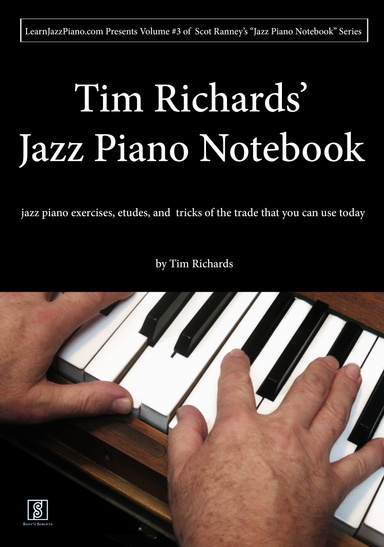
Volume 3 contains 12 jazz piano exercises and explorations by the acclaimed jazz piano educator, pianist, author, and recording artist Tim Richards.
Tim wrote the well known "Exploring Jazz Piano" and "Improvising Blues Piano" books and has several others to his name.
Tim has a new book out Beginning Jazz Piano (Pts 1 and 2)
Many of Tim's books now come with free access to interactive sheet music ONLINE, which permits slowing down of the backing and performance tracks, as well as the option to loop passages for practice purposes.
Tim now also has online VIDEO courses for his books, including Beginning Jazz Piano, Improvising Blues Piano and Exploring Jazz Piano Vol 1:
buy pdf version Tim Richards' Jazz Piano Notebook Volume 3 -
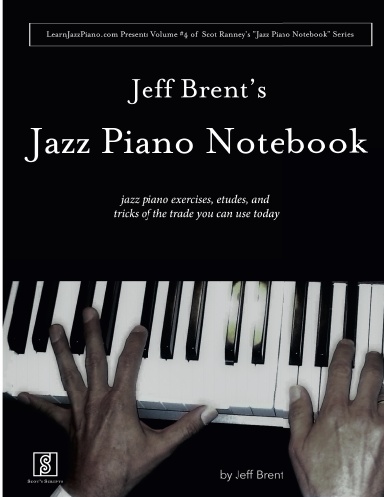
Volume 4 is by Jeff Brent, a jazz pianist, composer, teacher, and author of "Modalogy" and other acclaimed jazz theory and education books. In this book Jeff shares detailed analysis of transcriptions of live performances. He covers everything from the shape of the songs to the tricks and licks he uses in improvised lines to the ideas behind his lush chord voicings.
Most Recent Discussions
Articles
Piano for Adoption Scam
Aprender Jazz en Piano
BEWARE: FREE BABY GRAND PIANO SCAM
Oh Tannenbaum for Jazz Piano
Volume 5 of the "Jazz Piano Notebook Series" is Available!
LearnJazzPiano.com File Downloads News
more...
Top Sheetmusic Picks
Jazzy Christmas Arrangements
Cocktail Piano
Best Songs Ever, 6th Edition
Christmas Medley
Moana Songbook
Late Night Jazz Piano
Jazz piano education is cool.

Rock on. Follow your passion.
Sign In
LearnJazzPiano.com Copyright © 1995-2026 by Scot Ranney • website software and design by scot's scripts
LearnJazzPiano.com is For Sale - Serious Inquiries Only