talented players and timing--->feeling depressed
i noticed that there are young player that just seems to have great timing without much practise. i have spent the latest years focusing on timing and now i start to find the right pocket in some music. is there people that just "has it" ? that have a very precice technique and can learn everything faster? is it normal to feel that i don´t gain anything from my pracise? i also get depressed by listening to my playing. i allways feel "this sounds like shit" when playing. it is the same feeling when playing with people that havent played that much. this feeling is allways with me when playing. sometimes i get out from this world and actually play something "good" i feel like i´m in an other world. this can be a nice lick or just a chord in the very right pocket...i think that it is good if i can reach this state one time per band session... to reach this is why i play... because it feels so good...shit.. i feel so untalented...
There are no comments, leave a comment.
some people do some things better than others. i have students who just gett it, and others who struggle. some of my students have naturally better time than me, so time is one of the things i work on most.
like you, i can't stand to listen to my playing, but i'm never gonna get better if i don't listen or if i give up. i had a teacher once tell me i played great after a recital on which i felt i really sucked. she said, if i had felt i played great she would be concerned. the fact that i wasn't pleased is what causes me to play better next time (hopefully).
most of the great players i've met in my day, are never satisfied with their playing - you're in good company!

all you have to do is read some bill evans biographies to find out that he considered himself extremely untalented, but at the same time, he really dug into the music and found out that through hard work and study, he was able to become the great pianist that he was.
Scot is available for skype jazz piano lessons (and google hangouts, phone call, etc...)
Use the contact link at the top of the page.

by Scot Ranney on 04/15/2005, 13:09
the way i have been taught it is to practice eigth notes in a certain way. groups of four in particular. alot of master teachers i know of teach this method but when i have brought it up in this forum before, forum greats like doug mckenzie have critiqued me saying they have never heard of such a thing. so i dont teach the method here. i suggest finding someone whose time you respect and trying to get them to teach you on some level (if they are a teacher) if they are not a teacher they will probally not know how to teach it.
i am of the opinion that no one is born with a great sence of time and we all have to work on it and find our own way of dealing with it. but it is the key to consistent good playing.
unless you're in bed with these players, how can you possibly know how much they practice? they may be playing *more* or practicing *better* than you, and this may well account for their good rhythm.
"is it normal to feel that i don´t gain anything from my pracise?"
no, i don't think so, although i don't disallow that playing the wrong things can lead to very slow progress, approximating or equalling the effect of not progressing at all.
ianamt, so listen to the other music teachers on the thread, cum grano salis.
you can't always tell you are getting better each month, but in the last year and a 1/2 (that's how long i have been playing jazz) i can tell i have progressed every month or two.
perhaps your expectations are just unrealistic. how loing have you been playing?
mike: you're a powerful advocate of practicing without a metronome. can you talk of your philosophy of acquiring good time and how a metronome hinders you?
jeff: practicing with a metronome defeats the whole purpose of practicing because practicing is a fact finding event, not a performance event. when you play, you are supposed to play in time. when you practice, you are supposed to be learning new material or re-establishing contact with older studies. reading new music should never, ever be done with a metronome because the click becomes the priority, not the music. good time comes from the experience of playing your instrument on a regular basis and having a familiarity with your style. every great musician knows this. if you ever listen to the smoking big bands from the 1930's and 1940' s, ask yourself how 15 guys played as one without ever dragging the time, always sitting dead on the quarter note and swinging the music like it was a living entity. those bands played some of the hottest music in history and you can't tell me that a metronome ever gave those musicians the sense of time that they put out in those bands. their sense of time came from inside, and most players today don't know this or even how to find that internal place to draw from.
gary burton used a metronome as a teenager because he felt that his solos rushed too much. but, he was already a master player who wanted to deal with a specific element of his developing skills. today, guys emphasize metronomes as the way to get good time. bad mistake! the more you play, the better your time will become. automatically!
james jamerson, jerry jemmott, rocco prestia, jaco pastorius, larry graham, stanley clarke. they never used a metronome to give them what they all had, which is killer time. how do the advocates of metronomes explain that some of the greatest bass, drum, guitar, keyboard, string and horn players in music history didn't use metronomes and still have perfect time? as i said earlier, some musicians don't like to think because this question should shake up every musician who reads it.
Are you in the Pacific Northwest looking for a jazz jam? Check out our weekly Bellingham Jazz Jam!
Jazz Piano Notebook Series

Volume 1 of this educational jazz piano book contains 15 jazz piano exercises, tricks, and other interesting jazz piano techniques, voicings, grooves, and ideas Scot Ranney has picked up over decades of playing on stage.
Being a pro jazz pianist requires good ears, experience, and a bag of tricks that create the kinds of sounds people expect to hear from a jazz pianist. The entries in this book will give you some of those tricks.

"Latinesque"
Volume 2 has 14 jazz piano exercises and tricks of the trade, and quite a bit of it is Calypso jazz piano related material, including some Monty Alexander and Michel Camilo style grooves. Jazz piano education is through the ears, and books like this help connect what you're hearing to what you want to play.
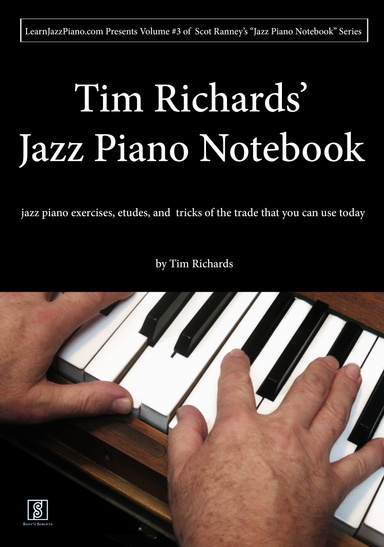
Volume 3 contains 12 jazz piano exercises and explorations by the acclaimed jazz piano educator, pianist, author, and recording artist Tim Richards.
Tim wrote the well known "Exploring Jazz Piano" and "Improvising Blues Piano" books and has several others to his name.
Tim has a new book out Beginning Jazz Piano (Pts 1 and 2)
Many of Tim's books now come with free access to interactive sheet music ONLINE, which permits slowing down of the backing and performance tracks, as well as the option to loop passages for practice purposes.
Tim now also has online VIDEO courses for his books, including Beginning Jazz Piano, Improvising Blues Piano and Exploring Jazz Piano Vol 1:
buy pdf version Tim Richards' Jazz Piano Notebook Volume 3 -
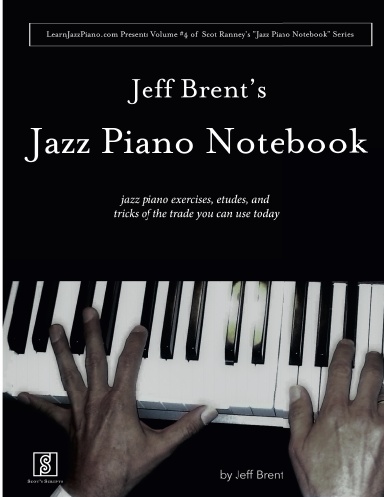
Volume 4 is by Jeff Brent, a jazz pianist, composer, teacher, and author of "Modalogy" and other acclaimed jazz theory and education books. In this book Jeff shares detailed analysis of transcriptions of live performances. He covers everything from the shape of the songs to the tricks and licks he uses in improvised lines to the ideas behind his lush chord voicings.
Most Recent Discussions
Articles
Piano for Adoption Scam
Aprender Jazz en Piano
BEWARE: FREE BABY GRAND PIANO SCAM
Oh Tannenbaum for Jazz Piano
Volume 5 of the "Jazz Piano Notebook Series" is Available!
LearnJazzPiano.com File Downloads News
more...
Top Sheetmusic Picks
Jazzy Christmas Arrangements
Cocktail Piano
Best Songs Ever, 6th Edition
Christmas Medley
Moana Songbook
Late Night Jazz Piano
Jazz piano education is cool.

Rock on. Follow your passion.
Sign In
LearnJazzPiano.com Copyright © 1995-2026 by Scot Ranney • website software and design by scot's scripts
LearnJazzPiano.com is For Sale - Serious Inquiries Only