Transcriptions
d/f
There are no comments, leave a comment.
if you know how to analyze a solo, you might get something out of looking over a printed transcription, but you'd be missing a whole lot of the real value of transcribing.
it gets easier -- when i'm in a transcription phase, i often write out one or two full solos a day, plus having time to practice. a reasonable goal might be one solo a week/month/whatever -- a little bit each day.
follow these steps for transcribing a tune:
write melody of a theme or a phrase.
write “b a s s” line.
write chords.
“b a s s” line is practical for recognizing chords. so you see if they are in root position (c7) or in an inversion (c7/e c7/g c7/bb).
if it sounds strange for you, try extended chords ( c9 c11 c13).
if it doesn’t sound good try altered chords.
the written transcription can help you with playing the recording, but rarely are they accurate.
the point to transcribing is to analyze the underlying principles of the soloists' ideas and put them into your own bag of tricks.
actually mastering the physical process of playing the transcribed solo is also useful from the "reflex/juggling" standpoint of musical performance. iow, the sheer physical ability to execute a lick will at some point seep into your playing when you least expect it and forever enrich your subconscious soloing ability.
tips on transcribing:
https://www.jeff-brent.com/lessons/transcr.html

do you know any good christmas sheet music that has a little bit of jazz and is arranged nicely?
i don't think it would be a total loss to learn solos from books but obviously you won't get the benefit of improving your ear that transcribing brings.
i agree with 7 about the innacuracies of many transcriptions but there are still benefits to be had from learning from books. one example is that you will be forced to play lines that you wouldn't normally play so your technique will improve. one of the things we are probably all guilty of is playing things that fall under our fingers or, more accurately, fit our own technique. even if you are playing another pianists' solo they will still play things that you will find technically difficult so it is a useful exercise from that point of view.
if you do choose to learn solos from books, i think it is absolutely vital that you develop the ability to analyse how the lines are put together and, again as 7 said, take these general concepts and try and work them into your own improvising. if you don't do this, then you will end up in the position that jletourn described when you can play solos note for note but not be able to improvise yourself.
it would obviously be better to do it yourself, but there is still plenty you can learn from published transcriptions.
1. your ears get a lot stronger during the act of transcription. that's one of the main reasons to do it!
2. you become more discerning about rhythm and where to place it. when you are trying to work out the exact rhythm of a line and counting it out a hundred times until you get it right, that act in itself is very very good for you.
Scot is available for skype jazz piano lessons (and google hangouts, phone call, etc...)
Use the contact link at the top of the page.

by Scot Ranney on 06/18/2005, 14:01
please see file "performing jazz lead sheets" at albetan's area.
whats the name of that christmas book you have with "the christmas song" on it?
https://guitar-primer.com/charts/chart-5070.html
i normally do it in c though, because it suits my voice better.
plus you can look through sheetmusic magazine indexes and find the original sheet music for just about any "standard" plus more that you might be looking for.
Scot is available for skype jazz piano lessons (and google hangouts, phone call, etc...)
Use the contact link at the top of the page.
by Scot Ranney on 06/19/2005, 13:18
d/f
if you know the christmas book for those chord changes i posted, can you tell me the name of that book?
Are you in the Pacific Northwest looking for a jazz jam? Check out our weekly Bellingham Jazz Jam!
Jazz Piano Notebook Series

Volume 1 of this educational jazz piano book contains 15 jazz piano exercises, tricks, and other interesting jazz piano techniques, voicings, grooves, and ideas Scot Ranney has picked up over decades of playing on stage.
Being a pro jazz pianist requires good ears, experience, and a bag of tricks that create the kinds of sounds people expect to hear from a jazz pianist. The entries in this book will give you some of those tricks.

"Latinesque"
Volume 2 has 14 jazz piano exercises and tricks of the trade, and quite a bit of it is Calypso jazz piano related material, including some Monty Alexander and Michel Camilo style grooves. Jazz piano education is through the ears, and books like this help connect what you're hearing to what you want to play.
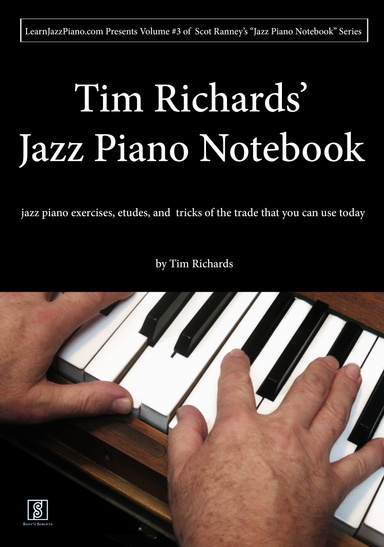
Volume 3 contains 12 jazz piano exercises and explorations by the acclaimed jazz piano educator, pianist, author, and recording artist Tim Richards.
Tim wrote the well known "Exploring Jazz Piano" and "Improvising Blues Piano" books and has several others to his name.
Tim has a new book out Beginning Jazz Piano (Pts 1 and 2)
Many of Tim's books now come with free access to interactive sheet music ONLINE, which permits slowing down of the backing and performance tracks, as well as the option to loop passages for practice purposes.
Tim now also has online VIDEO courses for his books, including Beginning Jazz Piano, Improvising Blues Piano and Exploring Jazz Piano Vol 1:
buy pdf version Tim Richards' Jazz Piano Notebook Volume 3 -
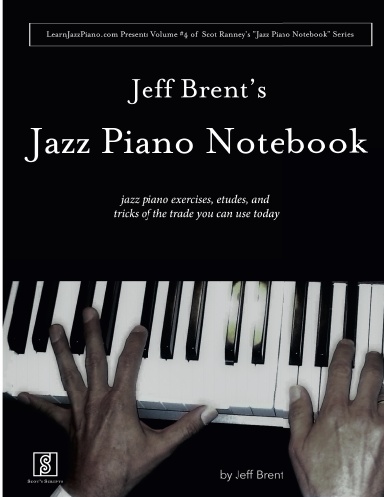
Volume 4 is by Jeff Brent, a jazz pianist, composer, teacher, and author of "Modalogy" and other acclaimed jazz theory and education books. In this book Jeff shares detailed analysis of transcriptions of live performances. He covers everything from the shape of the songs to the tricks and licks he uses in improvised lines to the ideas behind his lush chord voicings.
Most Recent Discussions
Articles
Piano for Adoption Scam
Aprender Jazz en Piano
BEWARE: FREE BABY GRAND PIANO SCAM
Oh Tannenbaum for Jazz Piano
Volume 5 of the "Jazz Piano Notebook Series" is Available!
LearnJazzPiano.com File Downloads News
more...
Top Sheetmusic Picks
Jazzy Christmas Arrangements
Cocktail Piano
Best Songs Ever, 6th Edition
Christmas Medley
Moana Songbook
Late Night Jazz Piano
Jazz piano education is cool.

Rock on. Follow your passion.
Sign In
LearnJazzPiano.com Copyright © 1995-2026 by Scot Ranney • website software and design by scot's scripts
LearnJazzPiano.com is For Sale - Serious Inquiries Only