llm7b5 V7 Im7 progressions
i have a certain book that recomends it, besides normal iim v7 imaj7
do you do(used to do) them as well thanks
There are 20 comments, leave a comment.
if you plan on only playing major keys only i would not waste your
time practicing minor open a nice cold bud instead and enjoy.
i can find plenty of use for iim7b5 v7 `s in songs ,but practising movements from v7 to im7 seems not so timeworthy
excuse my ignorance if im missing something basic here but music theory is just not my strong point,i just love to play
i just wondered how important they are so i could save valuable practice time on something else of more importance if they are not so
they are quite tricky though and seem more compicated then usual 251`s
one really useful technique i've come across that works for me is the following:
***whatever voicing you use for the half-diminished (ii) chord, move it up a minor 3rd, and you will automatically get a cool voicing for the v (alt) chord.***
so if you play dm7b5 as d f ab c, moving it up gives f ab b eb, which is a great sounding rootless g7 alt. it's good for more complex and two-handed voicings too - try it, but don't ask me why it works!
diminished chord you used for v alt and you get a cool voicing for i minor.
another way to say this is play.... d-7b5 to f-7b5 to a=7b5
and that is one way of voicing a minor ii vi i in the key of c minor.
i fouund levine jazz piano too overwhelming in the beggining,this one was more comprehensible to the system in which my brain learns.
for me the most difficult are the left hand ones since
my rock,blues&boogie backround and my left litllefinger always goes for the root
but to get that jazzthang going, i ve got practise ,,ruthlessly ´´
and its very rewarding when those 251s start to pop up when playing a tune.
personally i don't find the current practice of playing three different melodic minor scales to improvise over a minor ii–v-i very helpful. three different pentatonics works better for me, or just one blues scale for all three chords! i've outlined several other approaches in vol 2 of my book 'exploring jazz piano'.
anytime you are resolving to the minor 1 you can probably use this progression.
for swing examples, look at:
softly as in a morning sunrise
lullaby of birdland
angel eyes
autumn leaves
this is used heavily in minor latin music.
blue bossa comes to mind immediately, there's shadow of your smile, and others.
practicing this progression can be a lot of fun. turn on the drum machine and start playing. wish i could write some music into my post! anyone here a hot shot programmer and thinks they can make a web plugin for wysiwyg music editing using the music xml standard?
anyway, they are useful and should be concentrated on just as much as you concentrate on anything else you practice. the most simple thing to remember is that when you are harmonizing melodies in your solo playing, if you're going to a minor chord you can often harmonize the leading two melody notes using this progression, and it usually sounds pretty cool.
Scot is available for skype jazz piano lessons (and google hangouts, phone call, etc...)
Use the contact link at the top of the page.

by Scot Ranney on 04/30/2009, 12:26
confirmation:
fm7 | em7b5 a7b9 | dm7
weaver of dreams:
cm7 | bm7m5 e7b9 | am7
Scot is available for skype jazz piano lessons (and google hangouts, phone call, etc...)
Use the contact link at the top of the page.
by Scot Ranney on 05/01/2009, 09:53
yes many songs are quite similar e.g.
when i was learning blue bossa i was sort of
,,flying from the moon,,
i was wondering if the sly and the fam.stone was listening too much
to sunny and then he wrote if you want me to stay,omiting the min7b5 v7 or was it the other way,that a guy who wrote sunny heard if you want me to stay on the radio and the he wrote sunny adding 25 to make it more interesting
Are you in the Pacific Northwest looking for a jazz jam? Check out our weekly Bellingham Jazz Jam!
Jazz Piano Notebook Series

Volume 1 of this educational jazz piano book contains 15 jazz piano exercises, tricks, and other interesting jazz piano techniques, voicings, grooves, and ideas Scot Ranney has picked up over decades of playing on stage.
Being a pro jazz pianist requires good ears, experience, and a bag of tricks that create the kinds of sounds people expect to hear from a jazz pianist. The entries in this book will give you some of those tricks.

"Latinesque"
Volume 2 has 14 jazz piano exercises and tricks of the trade, and quite a bit of it is Calypso jazz piano related material, including some Monty Alexander and Michel Camilo style grooves. Jazz piano education is through the ears, and books like this help connect what you're hearing to what you want to play.
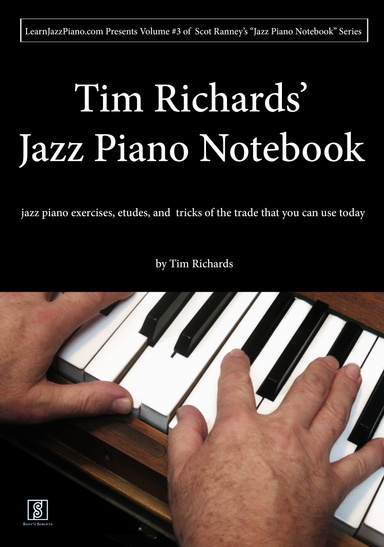
Volume 3 contains 12 jazz piano exercises and explorations by the acclaimed jazz piano educator, pianist, author, and recording artist Tim Richards.
Tim wrote the well known "Exploring Jazz Piano" and "Improvising Blues Piano" books and has several others to his name.
Tim has a new book out Beginning Jazz Piano (Pts 1 and 2)
Many of Tim's books now come with free access to interactive sheet music ONLINE, which permits slowing down of the backing and performance tracks, as well as the option to loop passages for practice purposes.
Tim now also has online VIDEO courses for his books, including Beginning Jazz Piano, Improvising Blues Piano and Exploring Jazz Piano Vol 1:
buy pdf version Tim Richards' Jazz Piano Notebook Volume 3 -
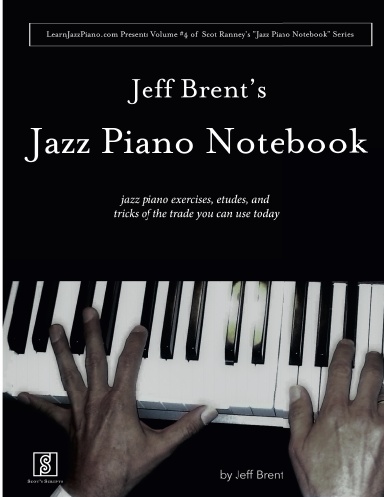
Volume 4 is by Jeff Brent, a jazz pianist, composer, teacher, and author of "Modalogy" and other acclaimed jazz theory and education books. In this book Jeff shares detailed analysis of transcriptions of live performances. He covers everything from the shape of the songs to the tricks and licks he uses in improvised lines to the ideas behind his lush chord voicings.
Most Recent Discussions
Articles
Piano for Adoption Scam
Aprender Jazz en Piano
BEWARE: FREE BABY GRAND PIANO SCAM
Oh Tannenbaum for Jazz Piano
Volume 5 of the "Jazz Piano Notebook Series" is Available!
LearnJazzPiano.com File Downloads News
more...
Top Sheetmusic Picks
Jazzy Christmas Arrangements
Cocktail Piano
Best Songs Ever, 6th Edition
Christmas Medley
Moana Songbook
Late Night Jazz Piano
Jazz piano education is cool.

Rock on. Follow your passion.
Sign In
LearnJazzPiano.com Copyright © 1995-2026 by Scot Ranney • website software and design by scot's scripts
LearnJazzPiano.com is For Sale - Serious Inquiries Only